Course overview.
Drawing on the methodology used by digital-verification journalists, OSINT practitioners and fraud investigators, the course covers image and video forensics, AI-generated content detection, behavioural analysis of online accounts, and the structured analytical techniques that distinguish a defensible deception assessment from a hunch. Hands-on throughout with real case material.
Who it's for.
Corporate communications professionals, fraud investigators, intelligence analysts, brand-protection specialists, journalists, HR professionals dealing with misrepresentation in recruitment, and senior leaders responsible for protecting organisational reputation. Particularly useful for organisations whose sector exposes them to coordinated digital deception campaigns.
What you'll learn.
Image and video forensics
The verification techniques used by professional fact-checkers: reverse image search, EXIF analysis, geolocation cross-checking, video frame-by-frame analysis, the tell-tale signs of common manipulation methods, and the practical tools (InVID, FotoForensics, the Sensity-style detectors) that distinguish reliable analysis from speculation.
AI-generated content and the synthetic-media frontier
The current state of synthetic-media detection — what the tools actually catch, what they reliably miss, the diagnostic features in AI-generated images, video and text, and the honest assessment of where we are in the deepfake arms race. Plus the analytical disciplines for working with content where AI involvement is uncertain rather than provable.
Account and behavioural analysis
Beyond the content — the behavioural fingerprints of inauthentic accounts and coordinated networks. Account-age analysis, posting-pattern signatures, network-graph indicators of coordinated inauthentic behaviour, and the structured analytical frameworks that produce defensible conclusions on digital deception campaigns.
What you'll leave with.
By the end of the day you'll be able to:
- Trace images to their earliest source with reverse image search
- Use metadata and geolocation to test where and when content was captured
- Recognise common features of AI-generated media
- Interpret detector results with appropriate caution
- Identify signs of coordinated inauthentic account networks
Before you book: None. Comfortable using a web browser is enough. Not sure it's the right level? Take the one-minute self-check.
Pairs well with:
Verify before you trust.
The methods used by professional fact-checkers and investigators, step by step. Select any stage to jump to it.
Is this course right for you?
Five quick questions, about a minute. You'll get an honest read on whether Deception Detection in Digital Spaces fits where you are now, and which parts of the course will help you most.
This course is fully fundable through ReACT+.
If you've been made redundant or are facing redundancy in Wales, the Welsh Government's ReACT+ scheme can fund up to £1,500 toward this course — plus childcare, travel and accommodation expenses. We'll handle the application.
Benefits of Attending This Course
Develop practical skills to detect deception, evaluate digital information and recognise manipulation techniques in online environments. Learn structured approaches to analysing digital content, improving situational awareness and supporting more informed, evidence-based decisions.
Ascent Training Wales · Bridgend.
Our conference room is purpose-built for effective training — bright, modern, and fully equipped for workshops, seminars and accredited sessions.
Llynfi Enterprise CentreHeol Ty Gwyn Industrial Estate
Maesteg, Bridgend, CF34 0BQ

Master Deception Detection in Digital Spaces
Recognise Digital Deception Techniques
Learn how deceptive content, misleading narratives and manipulation tactics appear across online platforms and digital environments.
Improve Online Information Assessment
Develop practical skills to evaluate digital sources, identify credibility indicators and distinguish reliable information from misleading content.
Strengthen Digital Awareness and Decision-Making
Gain techniques to analyse online behaviour, reduce exposure to manipulation and make better-informed decisions in professional environments.
What people get wrong.
Three things we hear before almost every Deception Detection in Digital Spaces course, and what's actually true.
Deepfakes are easy to spot.
Reality
The best are very convincing, and the clues change as tools improve. Provenance checks often matter more than visual clues.
AI detectors give a definite answer.
Reality
Detectors give probabilities and miss a lot. Treat a score as one clue among several.
Most misinformation is fabricated.
Reality
Much of it is real content with a false caption, date or location. Checking context catches a large share.
Common questions.
Quick answers to what most people ask before booking. Still need help? Get in touch.
How long is the course and where is it delivered?
How much does it cost and what's included?
When is the next date available?
Is this course eligible for ReACT+ funding?
Can you deliver this course in-house for our team?
Do I need technical skills?
Can you reliably detect deepfakes?
Who uses these skills?
From the classroom.
Our Bridgend venue is purpose-built for working learning — bright, modern, configurable for cohorts of four to twelve, with quality AV throughout and free parking right outside.

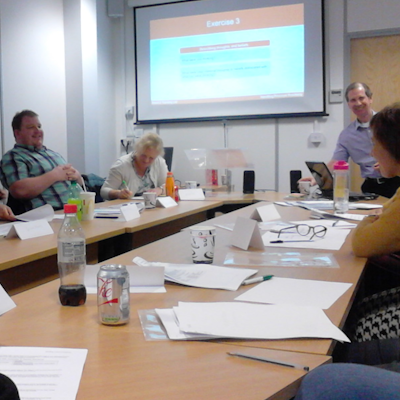


Llynfi Enterprise Centre · Bridgend · More about our venue →
More in Management.
Courses that pair well with The Art of Deception Detection in Digital Spaces, or that your team often takes as a sequence.


Ready when you are.
Book The Art of Deception Detection in Digital Spaces for £275 a seat, or send us a brief and we'll come back with a tailored in-house quote for your team within two working days.